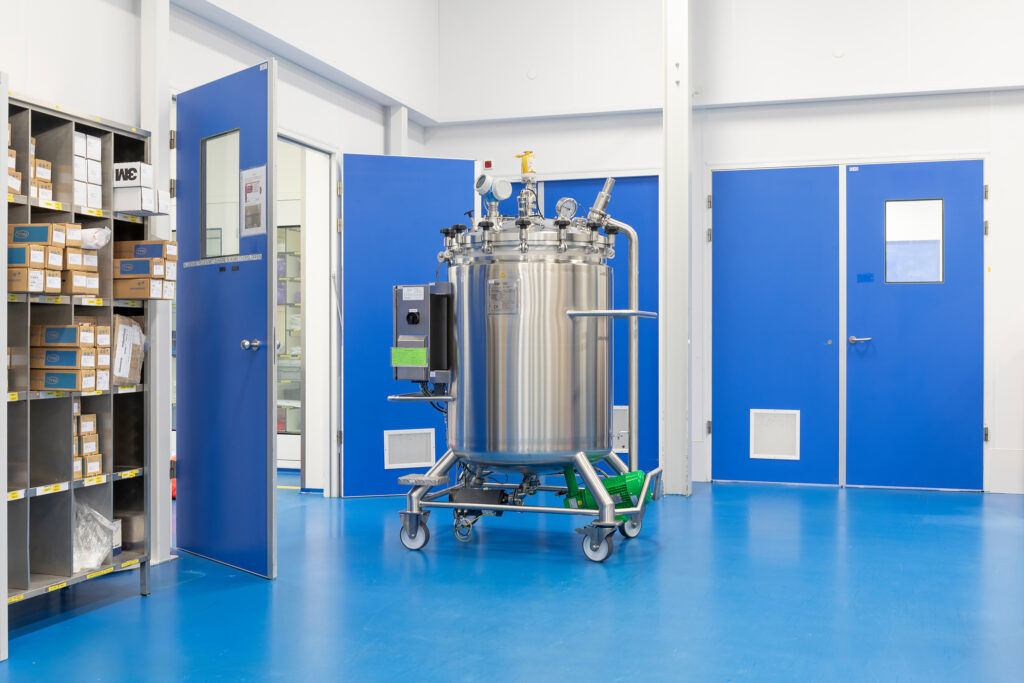



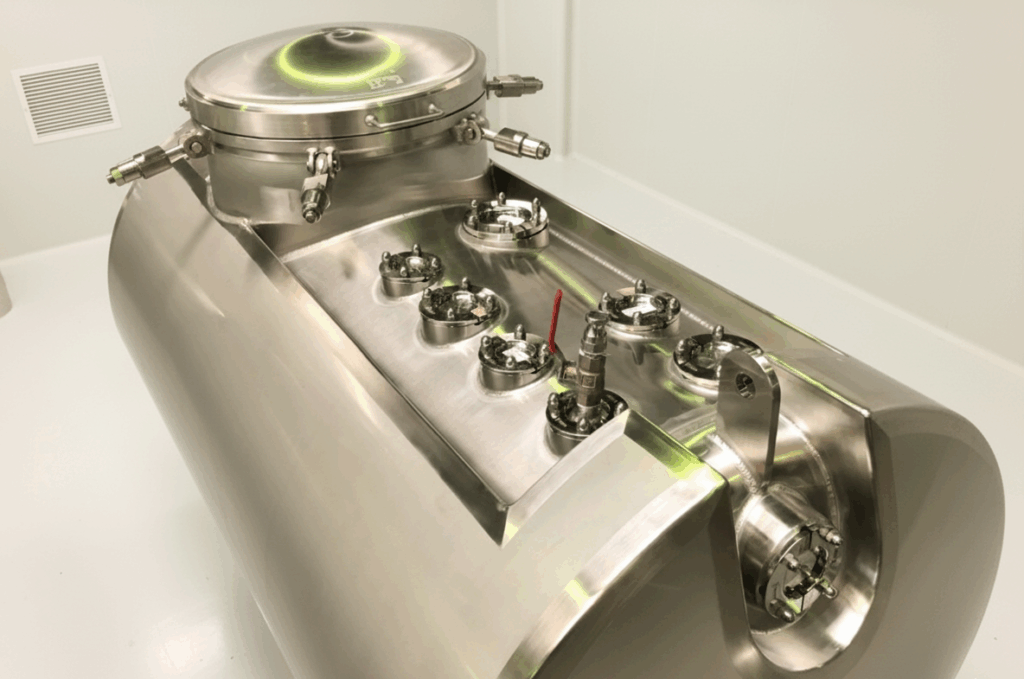
A kill tank is specifically designed vessel to safely manage hazardous or contaminated substances. These substances may include unwanted microorganisms, residual actives pharmaceutical ingredients, or other chemical agents that require careful handling. Its primary purpose is to neutralize or inactivate materials that could pose risks to health or safety. Kill tanks are engineered to handle high pressure and temperature processes, ensuring the substances are safely treated before further processing or disposal.
Kill tanks are essential in pharmaceutical industries because they can provide a controlled environment where potentially dangerous biological or chemical agents can be neutralized. By inactivating these materials, kill tanks support regulatory compliance and efficient processing of hazardous substances. Gpi designs and manufactures custom stainless steel kill tanks to meet the highest safety and hygiene standards.
Do you have a question about our kill tanks?
Kill tanks for controlled biological and chemical deactivation
Our pharmaceutical kill tanks are designed and manufactured to meet the highest industry standards for hygiene and safety. The tanks are equipped with jackets for temperature control, integrated agitators for uniform mixing, and spargers for enhanced gas injection. This way the kill tanks ensure efficient and consistent deactivation.
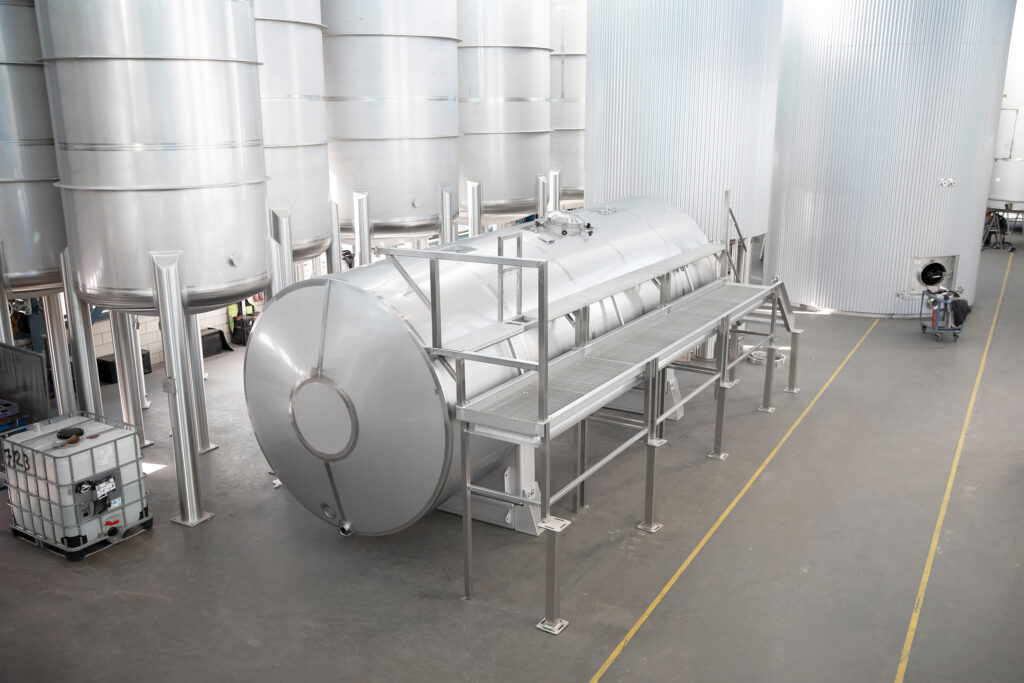
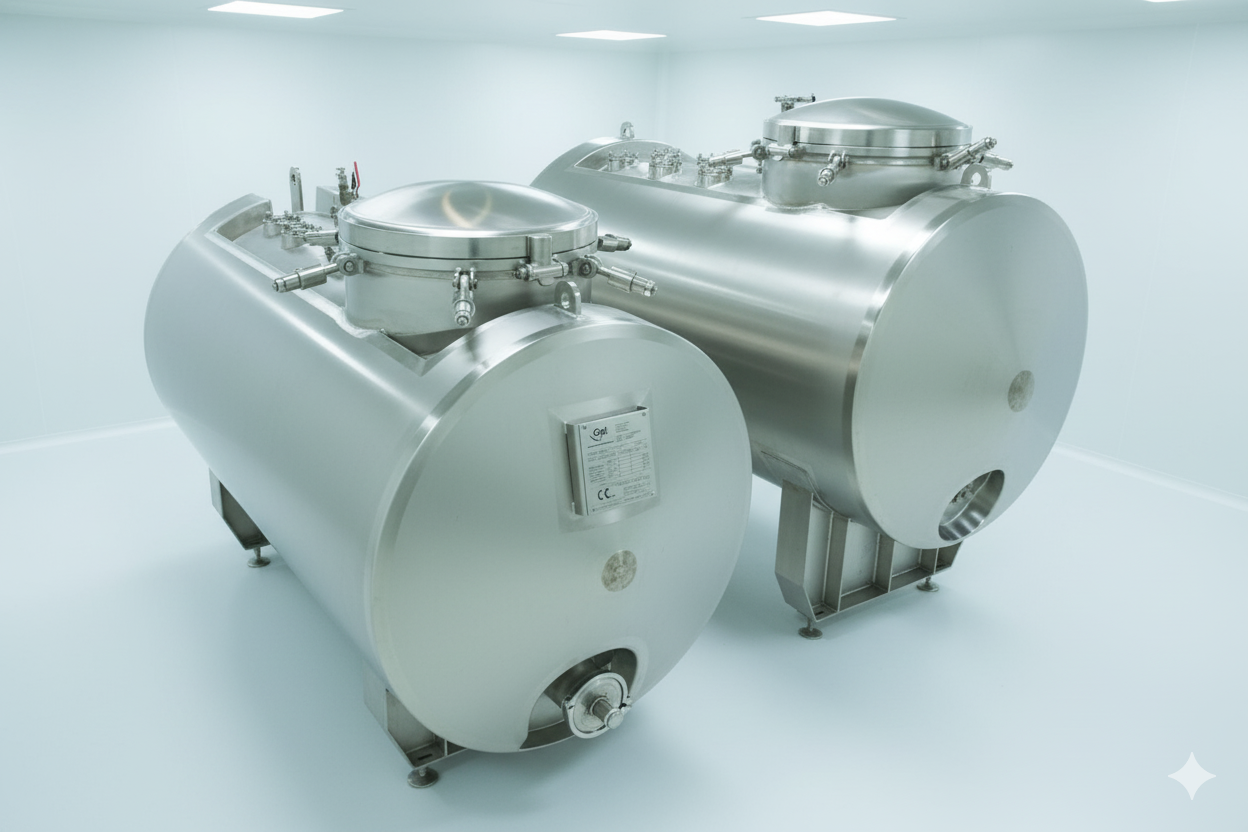
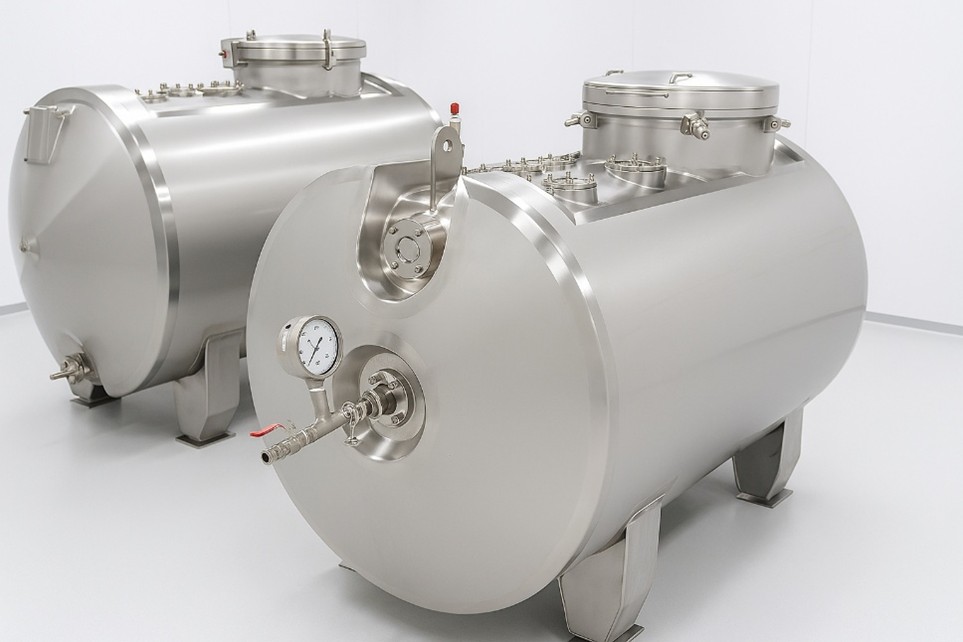
Each kill tank is built with durability, hygiene, and safety in mind. They are available in both vertical and horizontal configurations making sure the integration into existing facilities is seamless, supporting both small-scale and large commercial operations.
Kill tank applications in pharmaceutical and biotech production
Stainless steel kill tanks from Gpi are ideal for:
- Neutralizing hazardous substances such as unwanted microorganisms or API residues
- Safely treating biological agents prior to disposal or downstream processing
- Maintaining precise temperature and pressure conditions during deactivation
- Ensuring thorough mixing and gas distribution, thereby improving the deactivation process
- Facilitating hygienic operations with minimal contamination risk
By controlling the deactivation process, kill tanks help maintain safety and operational efficiency.
Key advantages of our stainless steel kill tanks
Our Kill Tanks are engineered for safe, efficient, and hygienic operation. Key features include:
- Premium materials: Constructed from high-quality stainless steel (e.g., 1.4404/316L, 1.4571) for corrosion resistance and long-term durability
- Advanced safety systems: Equipped with relief valves, pressure transmitters, and temperature sensors to ensure safe operation under high pressure and temperature
- Regulatory-Compliant Seals: FDA-approved PTFE, EPDM, or silicone seals ensure leak-proof closures and compliance with hygienic and safety standards
- Hygienic design and electropolishing options: Smooth interior surfaces reduce contamination risk and simplify cleaning and maintenance
- Clean-In-Place (CIP) capability: Cleaning without disassembly reduces downtime and ensures thorough cleaning between uses
- Integrated monitoring and control: Real-time pressure and temperature monitoring enable precise process control
- Robust Design and Compliance with Standards: Built to meet the highest industry standards, such as the Pressure Equipment Directive (PED) and EN13445, ensuring pressure and temperature resistance
- Flexible installation: Available in vertical or horizontal configurations to suit your facility layout
- Robust ventilation and air treatment: Controlled air circulation ensures safe handling of vapors and gases
- Jacketed heating and cooling: Maintains precise temperature for efficient deactivation
- Agitation and sparging: Integrated agitators and spargers ensure uniform mixing and optimal gas distribution
- Enhanced inspection and visibility: Sight glasses and light ports allow real-time monitoring of tank contents
Kill tank technical specifications and configurations
Our stainless steel kill Tanks can be fully customized to match specific process requirements:
- Materials such as 1.4404/316L or 1.4571 stainless steels
- Heating or cooling jackets with thermal insulation for precise temperature control
- Integrated agitators for uniform mixing and consistent temperature distribution
- Spargers for controlled gas injection and enhanced mixing efficiency
- CIP-compatible designs with rotary or fixed spray balls for optimized cleaning
- Flexible installation in vertical or horizontal configurations, depending on space and process needs
Your pharmaceutical kill tank manufacturer
Gpi specializes in stainless steel kill tanks that provide safe, controlled, and hygienic deactivation of hazardous materials. Our tanks are engineered to withstand the demanding conditions of high pressure and temperature, ensuring reliability, safety, and operational efficiency.
Whether implementing a new process or upgrading existing systems, our team delivers custom kill tank solutions that integrate seamlessly into your production environment.
Contact us today and discover how our stainless steel kill tanks can enhance safety and efficiency in your processes.
FAQ
What is the purpose of a kill tank in pharmaceutical production?
A kill tank is specifically designed to safely manage hazardous or contaminated substances in pharmaceutical and biotech processes. Its primary purpose is to neutralize or inactivate materials that could pose risks to health or safety — including unwanted microorganisms, residual active pharmaceutical ingredients, and other chemical agents. By providing a controlled environment for deactivation, kill tanks support regulatory compliance and ensure substances are safely treated before further processing or disposal.
How does a pharmaceutical kill tank neutralize hazardous substances?
A pharmaceutical kill tank uses a combination of high pressure, elevated temperature, and controlled mixing to effectively neutralize hazardous biological and chemical substances. The tank is equipped with a heating and cooling jacket for precise temperature control, integrated agitators for uniform mixing, and spargers for enhanced gas injection. Together, these systems ensure efficient and consistent deactivation of the target substances, while integrated pressure transmitters and temperature sensors maintain safe operating conditions throughout the process.
What safety features should a pharmaceutical kill tank include?
A pharmaceutical kill tank must be equipped with robust safety systems to handle the demanding conditions of high pressure and temperature processes. Key features include pressure relief valves and safety relief devices, pressure transmitters and temperature sensors for real-time monitoring, and FDA-approved seals in PTFE, EPDM, or silicone for leak-proof and hygienic closures. The tank must also comply with the Pressure Equipment Directive (PED) and EN 13445, ensuring structural integrity and safe operation under all process conditions.