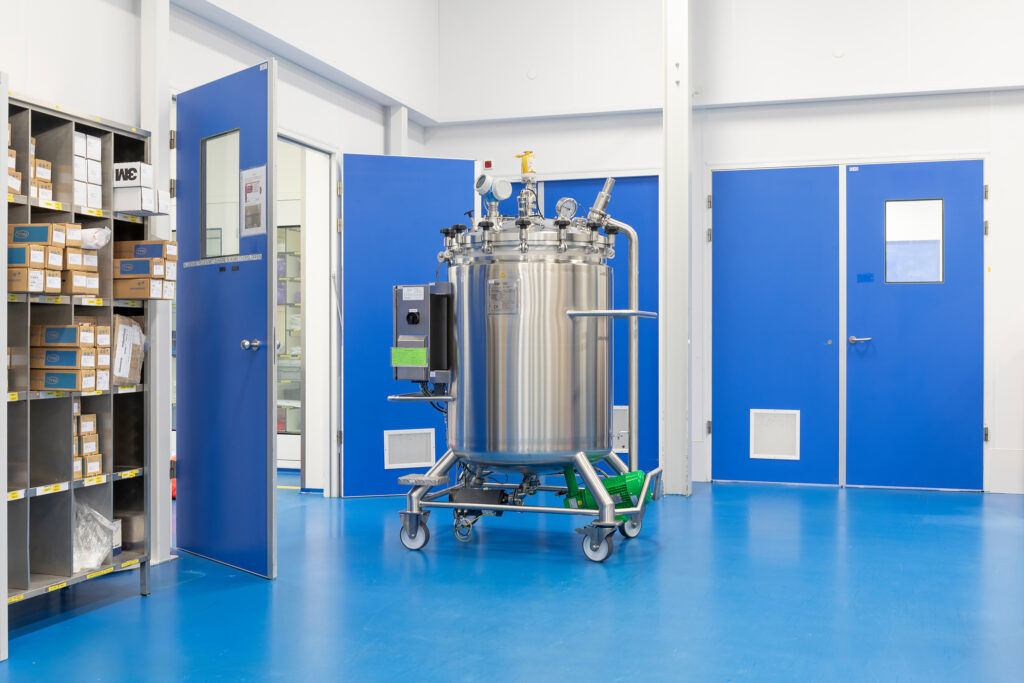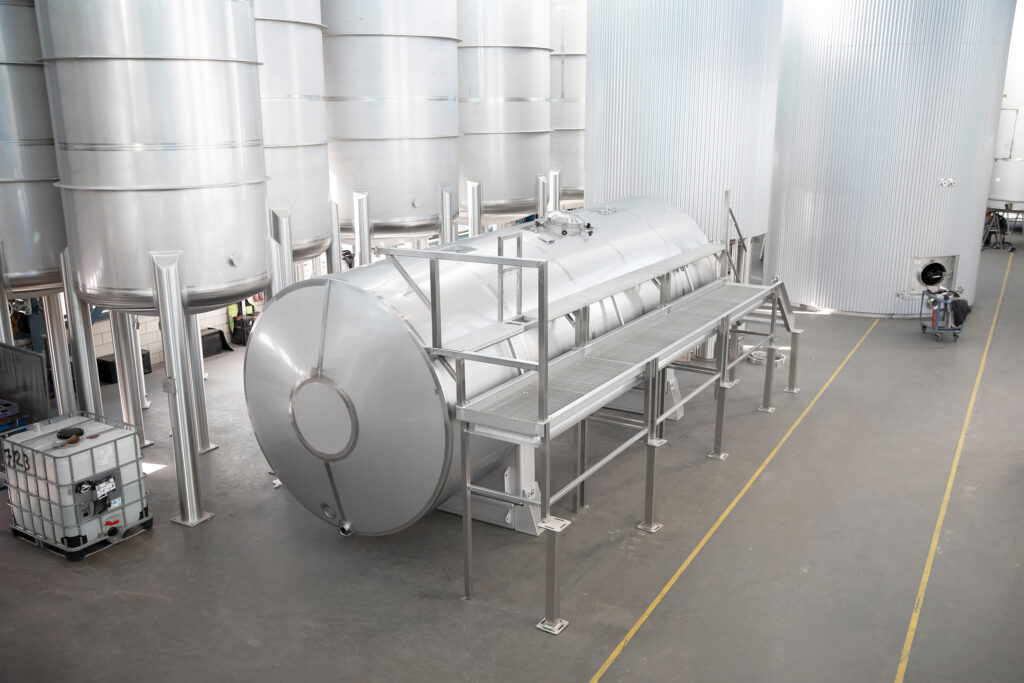
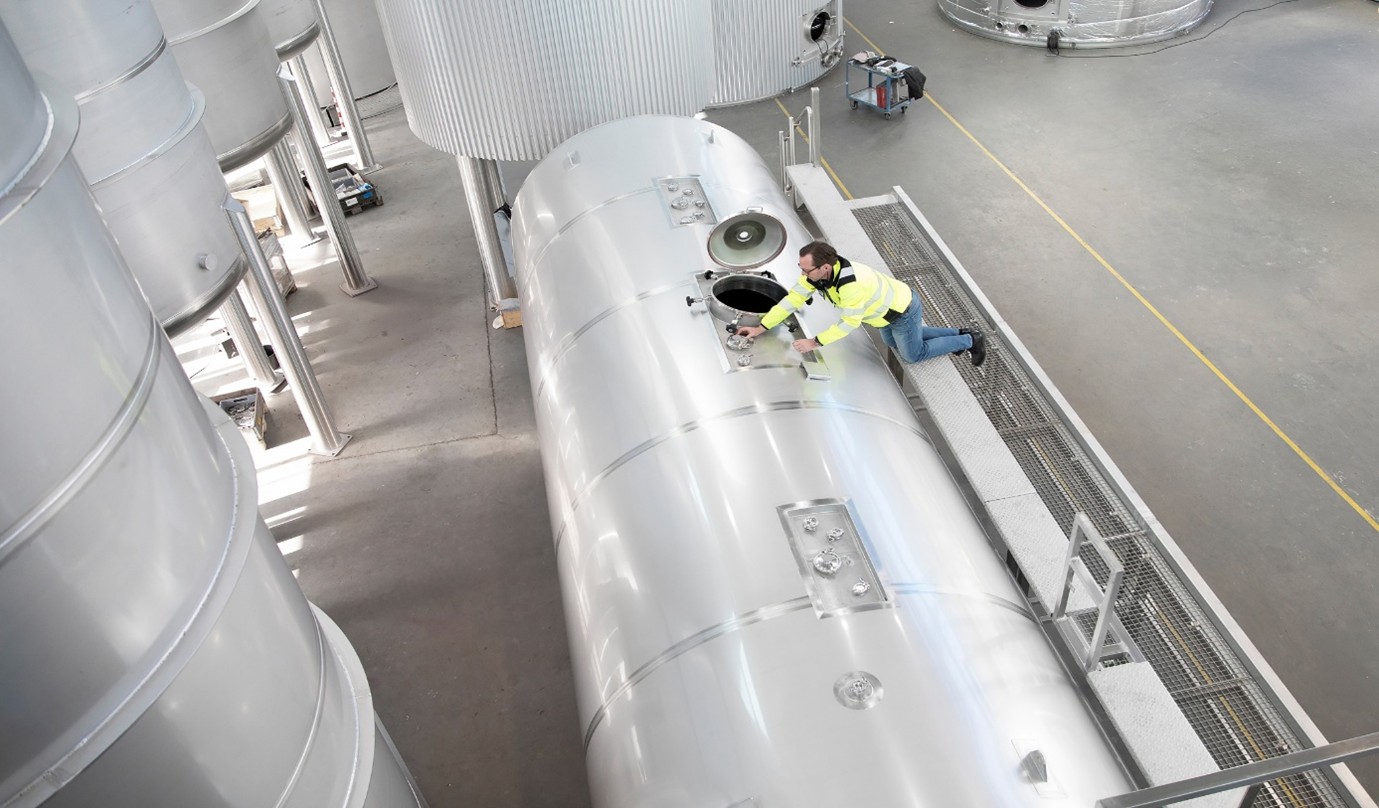



Pharmaceutical storage tanks are a critical component of any pharmaceutical production environment. The hygienic, safe, and controlled storage of raw materials, intermediates, and finished products is not just a quality requirement — it is a regulatory necessity. Whether you need to store active pharmaceutical ingredients (APIs), solvents, excipients, purified water, acids, caustic solutions, oil-based substances, or culture media for biotechnological processes, Gpi Pharma engineers a storage solution that meets the exact demands of your process.
Our stainless steel pharmaceutical storage tanks are fully custom-built and engineered in compliance with GMP, FDA, and USP guidelines. Each tank is designed for its specific application — from temporary waste storage in a production suite to large-scale bulk liquid storage in a full-scale manufacturing facility. Whether you operate a laboratory, a pilot plant, or an industrial production site, our pharmaceutical-grade stainless steel storage tanks integrate seamlessly into your existing process infrastructure.
Do you have a question about our storage tanks?
Custom storage tank for pharmaceutical production
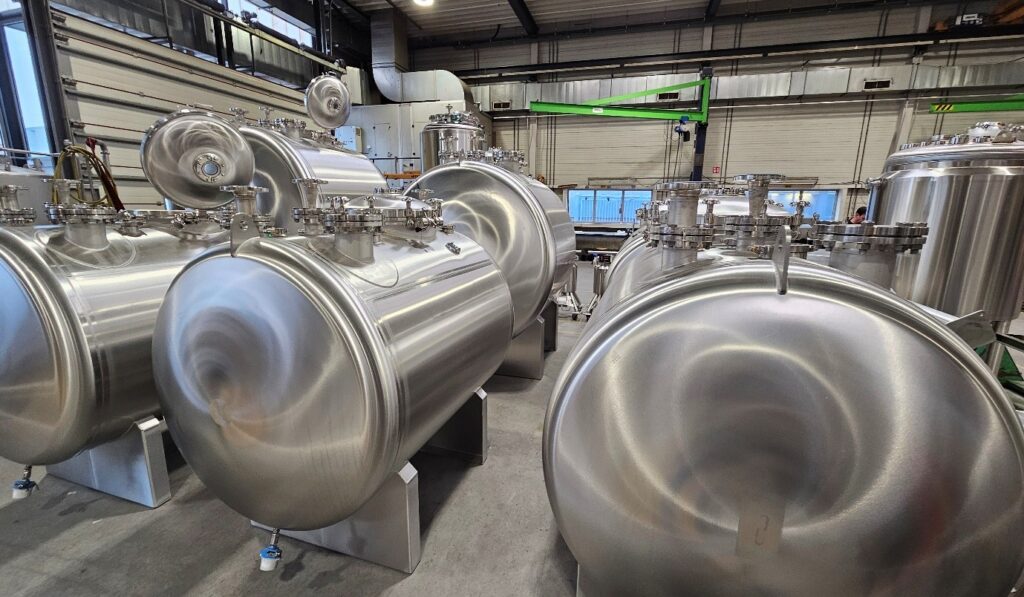
All our pharmaceutical storage tanks are custom-built to meet your specific process, product, and site requirements. We manufacture stainless steel storage tanks in a wide range of sizes and configurations — from compact 50-litre vessels for laboratory use to large-scale pharmaceutical storage tanks exceeding 100,000 litres for industrial production.
The design of each tank depends on the product type, batch size, and the available space at your facility. We work exclusively with pharmaceutical-grade stainless steel, including grades 316L, 316, duplex (1.4410), and super duplex (S32750/SAF2507), selected for their superior corrosion resistance and chemical compatibility. For less demanding pharmaceutical applications, 304 stainless steel offers a reliable and cost-effective alternative. Depending on your process requirements, our hygienic stainless steel storage tanks can be supplied with insulation, heating or cooling systems, and flexible installation options — vertical, horizontal, above-ground, or underground.
GMP and FDA-compliant pharmaceutical storage tanks
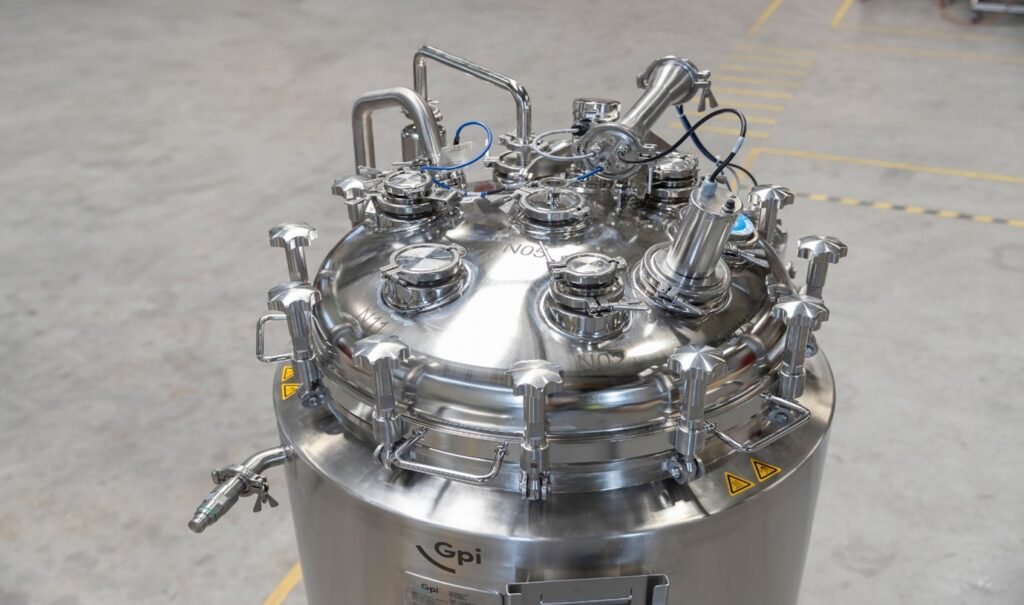
In pharmaceutical production, hygiene, safety, and control are non-negotiable. That’s why our pharmaceutical storage tanks are designed for optimal cleanability and safe, reliable operation. Key features include:
- Hygienic design with smooth internal surfaces to reduce contamination risk
- FDA- and USP VI-approved gaskets for safe pharmaceutical use
- Integrated CIP systems for efficient cleaning
- Leak detection systems for early warning in critical areas
- Radar and pressure transmitters, high-level alarms, and other process monitoring features
- Double-walled designs for added safety in storing sensitive or hazardous substances
- Pressure and temperature ratings tailored to your process
- Durable construction for indoor or outdoor use
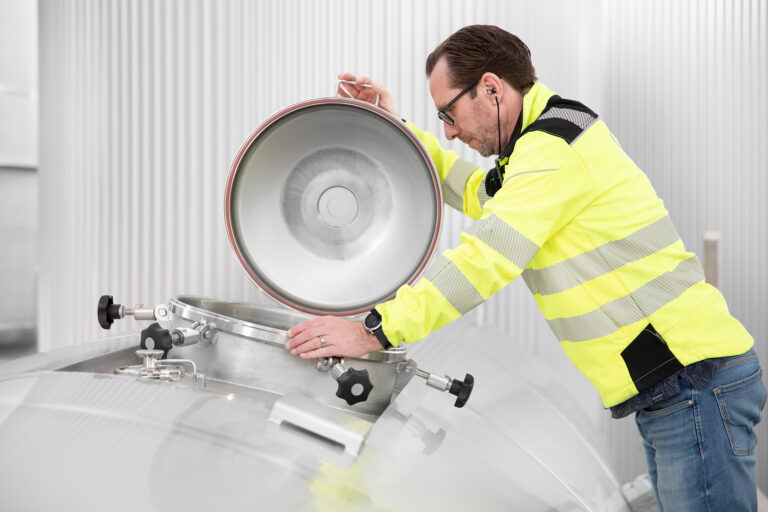
- Ergonomic access solutions for easy maintenance and inspection
- Fully compliant with EN 12285-1:2018, ASME BPE, ASME VIII, PED, VLAREM, WHG and Kiwa standards.
All our pharmaceutical storage tanks are built to support safe, hygienic, and efficient production, in line with the highest industry requirements.
Storage tank manufacturer into your pharma process
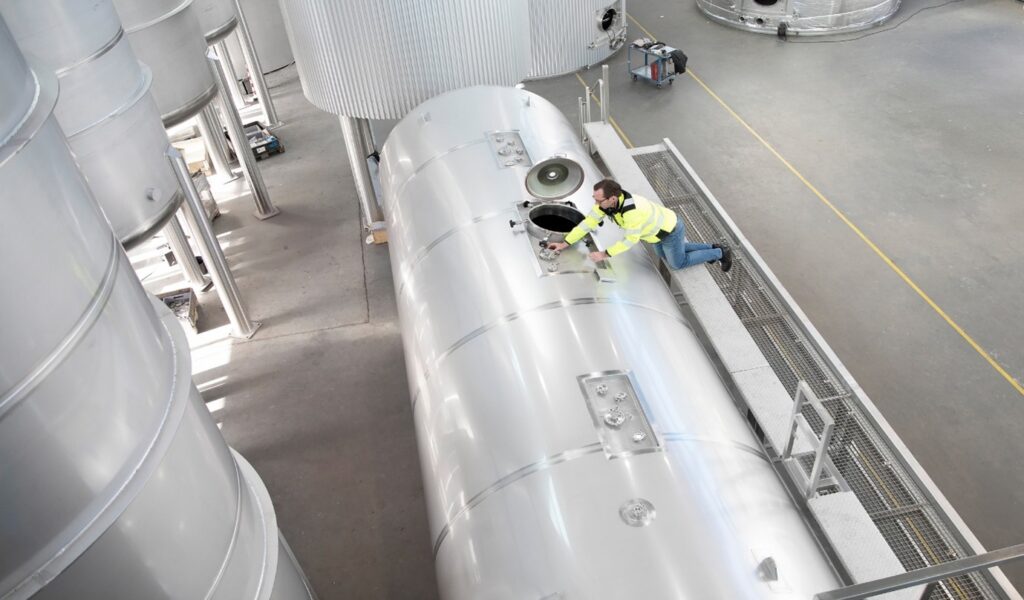
Every pharmaceutical process has its own requirements. That is why Gpi Pharma engineers fully custom pharmaceutical storage tanks — designed around your specific product, process conditions, and site constraints. From compact API storage vessels to large-scale tanks for solvents, intermediates, or production waste, we deliver the right solution for your application. Engineering and production are handled entirely in-house at our facility in Lopik, ensuring full quality control from the first design drawing to final delivery.
As an experienced stainless steel storage tank manufacturer, we work closely with your engineering and project team to ensure every tank integrates seamlessly into your process infrastructure. Each tank is delivered with full material traceability and documentation to support your validation and qualification requirements, in line with all applicable hygiene and safety standards.
FAQ
What standards and certifications should a pharmaceutical storage tank comply with?
A pharmaceutical storage tank must comply with a range of international hygiene, safety, and quality standards depending on its application and location. The most relevant standards include GMP and FDA guidelines, USP VI material requirements, ASME BPE for bioprocessing equipment, ASME VIII for pressure vessels, and the European PED directive. Additional standards such as EN 12285-1:2018, VLAREM, WHG, and Kiwa may apply depending on the substance stored and the country of installation. All Gpi Pharma storage tanks are engineered to meet the applicable standards for your specific process.
What is the difference between a single-wall and a double-wall pharmaceutical storage tank?
A single-wall pharmaceutical storage tank consists of one layer of stainless steel and is suitable for standard storage applications where containment requirements are straightforward. A double-wall storage tank features an additional outer shell, which serves multiple purposes: it can provide thermal insulation, enable temperature control through a heating or cooling jacket, and offer an extra layer of containment for sensitive or hazardous substances. Double-walled designs also allow for integrated leak detection systems, making them the preferred choice in critical pharmaceutical environments.
Can pharmaceutical storage tanks be custom-built for specific capacities or processes?
Yes. All Gpi Pharma pharmaceutical storage tanks are fully custom-engineered to your specific requirements. We manufacture stainless steel storage tanks ranging from compact 50-litre laboratory vessels to large-scale tanks exceeding 100,000 litres for industrial production. Beyond capacity, every tank is tailored to your process: material grade, surface finish, nozzle configuration, instrumentation, insulation, heating or cooling systems, and installation type — vertical, horizontal, above-ground, or underground — are all specified in close consultation with your engineering team.